Organic Spice Exporter India: A Complete Guide to Sourcing Premium Indian Organic Spices
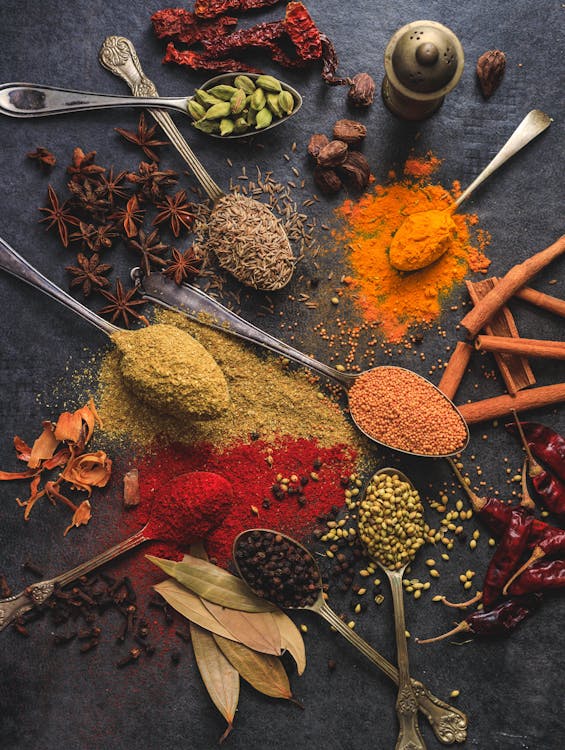
India has been called the Land of Spices for longer than most countries have existed. The southern coast of Kerala drew traders from Arabia, China, and Europe for centuries, all of them chasing the same thing — pepper, cardamom, and cinnamon that grew nowhere else with the same intensity. That trade never stopped. It evolved. Today, the conversation has shifted from simply 'spices' to 'certified organic spices,' and the buyers driving it are different. They are importers, distributors, supermarket chains, food manufacturers, and private-label brands in the US, EU, Middle East, and Asia-Pacific — all looking for an organic spice exporter in India who can deliver consistent quality with the paperwork to prove it.
This guide is written for the people who place those orders. It covers what makes organic spices different, which Indian varieties dominate global trade, the certifications that actually matter, how quality is controlled from farm to container, and what to ask before you commit to a supplier. The goal is practical: help you source premium organic spices from India with confidence.
Table of Contents
- Why India is the Leading Organic Spice Exporter
- What Makes Organic Spices Different?
- Most Exported Organic Spices from India
- Organic Certifications Required
- Quality Assurance
- Packaging Options
- Major Export Markets
- How to Choose the Right Organic Spice Exporter
- Why Businesses Choose Orgaluv
- Frequently Asked Questions
- Conclusion
Why India is the Leading Organic Spice Exporter
India's dominance in organic spice production is not a marketing claim. It is a function of geography, biodiversity, farming tradition, and export infrastructure working together.
Diverse Climate and Growing Regions
Spices in India grow across a remarkable range of altitudes and climates. Cardamom thrives in the Western Ghats at 800-1500 metres. Turmeric grows in the red soils of Telangana, Tamil Nadu, and Andhra Pradesh. Black pepper climbs the same Ghats as cardamom but also flourishes in coastal Kerala. Cumin is a winter crop in Gujarat and Rajasthan, where the dry, cool post-monsoon climate suits it. That diversity means an Indian exporter can supply a full basket of organic spices from a single country, which simplifies sourcing for buyers who would otherwise need to stitch together supply from multiple origins.
Sustainable Farming Practices
Organic spice cultivation in India is built on practices that predate the synthetic chemical era — composting, crop rotation, intercropping, and biological pest control. Many organic spice farms are smallholder operations, and the organic protocols fit naturally into farming methods families have used for generations. The result is a supply base that can meet organic standards without a steep learning curve.
Rich Biodiversity
India is home to dozens of native spice varieties, many with Geographical Indication protection. Alleppey turmeric, Coorg black pepper, and Wayanad cardamom each carry distinct flavour profiles tied to their terroir. For buyers, this means access to spices with specific origin characteristics — not generic commodity powder, but product with a story that retail brands can build on.
Global Reputation
India is the world's largest producer, consumer, and exporter of spices. The Spices Board of India, under the Ministry of Commerce, regulates and promotes spice exports, maintains quality standards, and runs the organic certification support programme. Decades of export history mean that Indian organic spices are already on shelves in over 180 countries. Buyers are not taking a chance on an untested origin — they are buying into an established supply chain.
Export Infrastructure
The spice export ecosystem has matured significantly. Modern processing facilities with steam sterilisation, sortex cleaning, and metal detection are now common in Kochi, Guntur, Unjha, and other spice hubs. Ports on both coasts — Kochi, Mundra, Nhava Sheva, Chennai — handle regular container sailings to every major market. This infrastructure is what allows Indian exporters to ship cleaned, certified, microbiologically safe organic spices at scale.
Pull quote: An organic certificate tells you how the spice was grown. A clean microbiological report tells you it is safe to put on a supermarket shelf. You need both, and they come from different parts of the process.
What Makes Organic Spices Different?
The difference between organic and conventional spices is not just a label. It runs through the entire supply chain — from what goes into the soil to what arrives in your container.
Organic Farming Methods
Organic spice farming prohibits synthetic pesticides, chemical fertilisers, growth regulators, and GMOs. Instead, soil fertility is maintained through compost, green manure, and crop rotation. Pest control relies on biological agents, neem-based preparations, and physical barriers. The farm must be managed organically for a conversion period — typically two to three years — before the crop can be certified organic.
No Synthetic Pesticides or Fertilisers
This is the core distinction. Conventional spice farming often relies on chemical inputs that can leave residues in the final product. Organic farming eliminates that risk at the source. For buyers in the EU and North America, where Maximum Residue Limits (MRLs) are stringent and getting stricter, sourcing organic is a way to manage residue risk structurally rather than lot by lot.
Better Traceability
Organic certification requires documentation at every step — from the farm and its input records, through the processor, to the final packed product. This creates a traceability chain that conventional supply rarely matches. For buyers who need to demonstrate origin and process integrity to their own regulators or retail customers, that documentation is a significant advantage.
Sustainability
Organic farming is designed to maintain soil health, conserve water, and support biodiversity. For brands that make sustainability claims to consumers, organic sourcing provides the third-party-verified backing those claims require. It is not just about the spice — it is about the story the spice supports.
Consumer Demand
Global organic food demand has grown consistently for over a decade. Spices are a category where consumers are particularly willing to pay a premium for organic, because spices are perceived as concentrated and integral to flavour. Retailers know this, and they are expanding organic spice shelf space. That demand flows directly to exporters who can supply certified product at volume.
Premium Quality
Organic spices are often grown from traditional cultivars in their native regions, harvested at peak maturity, and processed in smaller batches. The result is a product that frequently outperforms conventional commodity spices on colour, aroma, and essential-oil content. Quality is not guaranteed by the organic label alone, but the farming and handling practices behind it tend to produce a better raw material.
Most Exported Organic Spices from India
India exports over 50 varieties of organic spices. The table below covers the twelve most commonly traded internationally.
| Spice | Major Growing Region | Applications | Major Export Markets |
|---|---|---|---|
| Turmeric | Telangana, Tamil Nadu, Andhra Pradesh | Curries, golden milk, supplements, natural colourant | USA, Germany, UK, Japan, UAE |
| Black Pepper | Kerala, Karnataka, Tamil Nadu | Universal seasoning, spice blends, marinades | USA, Germany, France, UK, Singapore |
| Cardamom | Kerala (Idukki, Wayanad), Tamil Nadu | Garam masala, chai, Middle Eastern coffee, baking | Saudi Arabia, UAE, Kuwait, USA, Germany |
| Cumin | Gujarat, Rajasthan | Curries, spice blends, breads, cheeses | USA, UK, Germany, UAE, Bangladesh |
| Coriander | Rajasthan, Madhya Pradesh, Gujarat | Curries, salsas, sausage, brewing | USA, UK, Germany, Malaysia, Australia |
| Red Chilli | Andhra Pradesh, Telangana, Madhya Pradesh | Heat and colour in curries, sauces, snacks | USA, UK, UAE, Malaysia, Thailand |
| Ginger | Kerala, Karnataka, Assam, Meghalaya | Baking, beverages, stir-fry, traditional medicine | USA, UK, Germany, Japan, UAE |
| Cinnamon | Kerala, Tamil Nadu | Baking, curries, desserts, beverages | USA, Germany, UK, UAE, Mexico |
| Cloves | Kerala, Tamil Nadu | Masala blends, baking, oral care, ham curing | USA, Germany, UK, UAE, Singapore |
| Fennel | Gujarat, Rajasthan | Sausage, breads, liquors, mouth freshener | USA, UK, Germany, UAE, Italy |
| Fenugreek | Rajasthan, Gujarat, Madhya Pradesh | Curries, pickles, supplements, herbal medicine | USA, UK, Egypt, UAE, France |
| Mustard Seeds | Rajasthan, Gujarat, Madhya Pradesh | Mustard paste, pickling, spice blends, oil | USA, UK, Germany, Bangladesh, Canada |
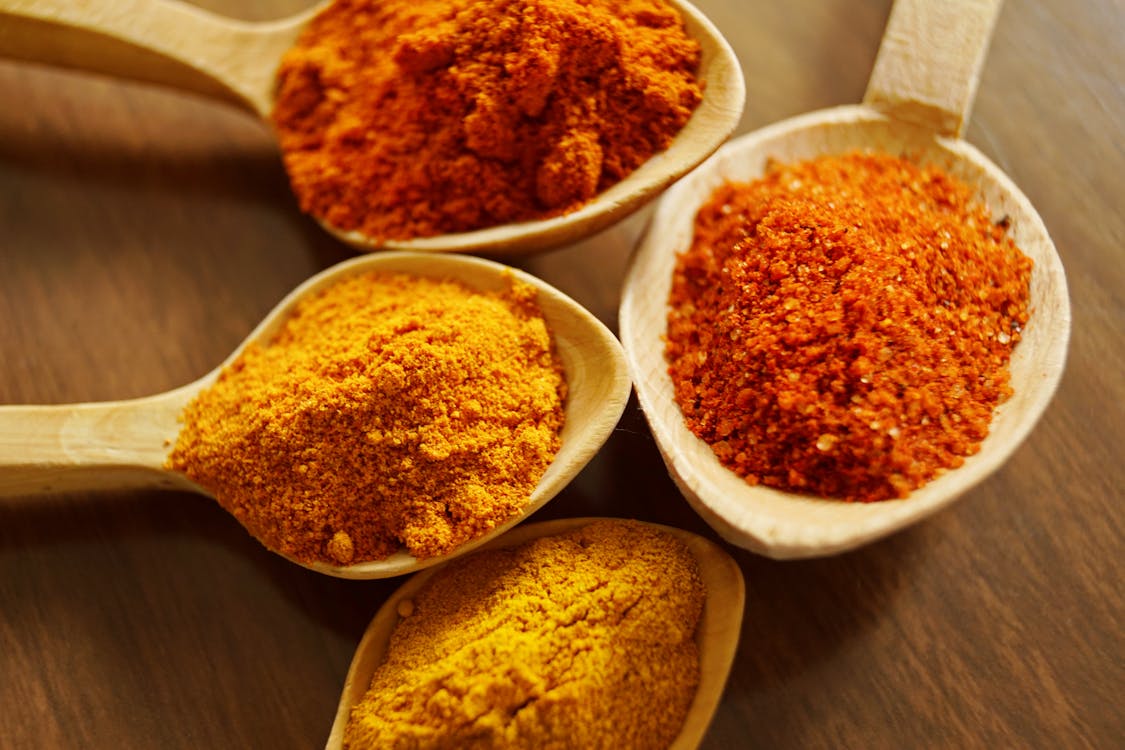
Callout: Turmeric is India's single largest organic spice export by volume, driven by global demand for curcumin in food, supplement, and cosmetic applications. If you are building an organic spice range, turmeric is almost always the first SKU buyers ask for.
Organic Certifications Required
Certifications are the verification layer of organic spice trade. A buyer cannot visit every farm, so they rely on third-party audits to confirm that 'organic' means what it says. The certifications below are the ones that matter for international trade.
NPOP (National Programme for Organic Production)
India's domestic organic standard, administered under APEDA. NPOP is the baseline for any organic spice exported from India. It defines the farming, processing, and labelling rules that Indian organic products must follow, and it is recognised as equivalent to the EU organic standard and the USDA National Organic Program for certain product categories.
NOP (USDA Organic)
The United States Department of Agriculture's organic standard. For organic spices entering the US market, NOP certification — verified by a USDA-accredited certifying agent — is required to label the product as 'organic' on American shelves. Many Indian certifiers are NOP-accredited, so a single audit can cover both NPOP and NOP.
EU Organic
The European Union's organic regulation (currently Regulation 2018/848). India's NPOP is recognised as equivalent for certain categories, which simplifies access, but buyers should confirm equivalence for their specific spice and product form. EU organic is mandatory for any product sold as organic within the EU.
APEDA Registration
APEDA registration is mandatory for all organic agricultural exports from India. APEDA coordinates the National Programme for Organic Production, issues export certificates, and maintains the traceability system (trace.net) that links certified organic product from farm to port.
FSSAI
The Food Safety and Standards Authority of India certification confirms that the processing facility meets Indian food safety standards. It is a baseline requirement for any spice processor exporting from India.
ISO 22000
An international food safety management system standard. ISO 22000 goes beyond HACCP by integrating a full management system approach. It is voluntary but common among credible exporters, particularly those supplying EU and North American retailers.
HACCP
Hazard Analysis and Critical Control Points identifies and controls food safety hazards at specific points in the processing chain. For spices, the critical control points typically cover steam sterilisation, metal detection, and moisture control. HACCP is often a buyer requirement, especially for EU and US markets.
Halal
Halal certification confirms that the spice has been processed and handled in accordance with Islamic dietary law. It is important for buyers in the Middle East, Southeast Asia, and any market with a significant Muslim consumer base. For spices, Halal certification is straightforward but must come from a recognised body.
Certificate of Origin
Confirms that the spices were produced and processed in India. It is essential for claiming preferential tariff treatment under trade agreements and is a standard customs document at the importing port.
Phytosanitary Certificate
Issued by the plant quarantine authority, this certificate confirms that the spices are free from quarantine pests and diseases. It is mandatory for most destination markets and is checked at the importing port. For organic spices, it accompanies — but does not replace — the organic certificate.
Callout: Organic certification and food safety certification answer different questions. Organic tells you how it was grown. HACCP, ISO 22000, and phytosanitary certificates tell you whether it is safe and clean. A credible exporter provides both layers without being asked.
Quality Assurance
Quality in organic spices is built through a sequence of controlled steps from farm to packed container. The process below is what a credible exporter follows on every lot.
Farm Sourcing
The process starts with sourcing from certified organic farms. The exporter (or their aggregator) verifies that each farm holds a valid organic certificate and that the crop was grown under organic protocols. For spices with Geographical Indication — like Alleppey turmeric or Coorg pepper — origin verification is part of the sourcing step.
Cleaning
Raw spices arrive at the processing facility with field dirt, dust, stones, and extraneous matter. Mechanical cleaning — through sieves, aspirators, and gravity separators — removes this material. For organic spices, the cleaning line must be dedicated to or thoroughly cleaned between organic and conventional runs to prevent contamination.
Sorting and Grading
Spices are sorted by size, colour, and density. Optical sorters (sortex machines) remove discoloured, damaged, or immature grains. Grading separates product into export grades — for example, Grade A whole turmeric fingers versus splitting grade. Consistent grading is what allows a buyer to receive the same product specification across shipments.
Steam Sterilisation
Spices are naturally high in microbial load — yeast, mould, and sometimes Salmonella or E. coli. Steam sterilisation is the industry-standard method for reducing microbial contamination in organic spices without using chemical fumigants (which are prohibited under organic standards). The process uses food-grade steam at controlled temperature and time to achieve a 3-5 log reduction in microbial counts while preserving colour, volatile oil, and flavour.
Laboratory Testing
Every export lot should be tested by an accredited laboratory. The standard panel for organic spices includes:
- Microbiological: Total plate count, yeast and mould, E. coli, Salmonella
- Pesticide residue: Multi-residue screening to confirm no prohibited substances, with results against the destination market's MRLs
- Moisture: Excess moisture causes caking, mould, and shelf-life failure
- Aflatoxin: Particularly for spices like chilli, coriander, and turmeric, where aflatoxin risk is higher
- Heavy metals: Lead, cadmium, arsenic — increasingly required by EU and US buyers
Residue Analysis
Pesticide residue analysis is the single most important test for organic spices. It confirms that the organic claim is real — not just on paper, but in the product. Buyers in the EU and US should always request a residue report for the specific lot they are buying. A credible exporter provides this proactively.
Moisture Control
Moisture is the enemy of shelf life in spices. Export-grade organic spices are dried to a moisture content appropriate to the variety — typically below 10-12% for whole spices and below 8-10% for ground. The packed product must stay within that range through the sea voyage, which is why packaging and container conditioning matter.
Traceability
Organic certification requires a traceability chain from farm to packed product. The exporter should be able to provide the farm or group of farms, the certifying body, the certificate number, and the processing batch that links to your specific lot. This is not a marketing feature — it is a regulatory requirement for organic trade.
Export Packaging
Final packaging protects the spice through the sea voyage and meets the destination market's labelling requirements. For bulk, this is typically 25 kg or 50 kg PP or kraft bags with food-grade liners. For retail and private label, it is printed pouches or jars with the organic logo, nutritional panel, and barcode in the destination country's format.
Packaging Options
Packaging for organic spice exports ranges from retail-ready consumer packs to bulk formats for food manufacturers and re-packers.
Standard Pack Sizes
| Pack Size | Typical Format | Best Use |
|---|---|---|
| 100 g | Printed retail pouch | Premium retail, sampling, gift sets |
| 250 g | Printed pouch or jar | Retail, ethnic stores, online |
| 500 g | Printed pouch | Retail, small food service |
| 1 kg | Stand-up pouch or jar | Retail, HORECA, small distributors |
| 5 kg | Bag-in-box or bulk pouch | Food service, small manufacturers |
| 10 kg | Kraft bag with liner | Wholesale, repackers |
| 25 kg | PP woven bag with liner | Bulk buyers, food manufacturers |
| 50 kg | PP woven bag with liner | Large bulk buyers, industrial users |
Packaging Materials
- PP Bags — Woven polypropylene bags with food-grade inner liners. Durable, cost-effective, and the standard for bulk spice exports.
- Kraft Paper Bags — Multi-wall kraft bags with inner PE liner. Preferred by organic and eco-conscious brands for their natural appearance and recyclability.
- Vacuum Packaging — Removes oxygen to extend shelf life and preserve volatile oils. Used for premium whole spices where aroma retention is critical.
Private Label and Custom Branding
For buyers building their own brand, private label packaging includes custom-printed pouches or jars, the organic certification logo, nutritional labels in the destination country's format and language, barcode assignment, and design support. A sample pack is typically produced for approval before a full production run.
Major Export Markets
Indian organic spices ship to over 180 countries. The destinations below represent the largest and most consistent demand.
North America
- USA — The largest single market for Indian organic spices. Demand spans turmeric, black pepper, cumin, coriander, and cardamom, driven by both the organic food market and the supplement industry.
- Canada — Strong demand for organic turmeric, black pepper, and ginger, supported by a growing organic retail sector and a diverse population.
Europe
- Germany — The largest organic food market in Europe. German buyers demand rigorous documentation and residue testing, and they pay for quality that meets those standards.
- France — Significant demand for organic black pepper, cardamom, and cinnamon, with an emphasis on traceability and origin.
- Netherlands — A major entry point for organic spices into the EU, with Rotterdam serving as a distribution hub for re-export across the continent.
- United Kingdom — Long-standing demand for organic turmeric, cumin, and coriander, driven by both retail and the South Asian diaspora.
Middle East
- UAE, Saudi Arabia, and Qatar — Strong demand for organic cardamom, black pepper, and cloves. The Middle East values organic spices for both retail and the large HORECA sector, and Halal certification is often required alongside organic.
Asia-Pacific
- Australia — Growing demand for organic turmeric, black pepper, and ginger, with strict import standards that align well with Indian organic certification.
- Japan — A premium market for organic turmeric and cardamom. Japanese buyers are among the most quality-sensitive in the world, with exacting residue and microbial limits.
- Singapore — A regional hub for organic spice distribution into Southeast Asia, with demand for pepper, coriander, and cumin.
Why Indian Organic Spices Dominate These Markets
Indian organic spices are preferred in these destinations for a combination of reasons: the range of varieties available from a single origin, established shipping lanes, competitive pricing relative to other organic origins, and — for specific varieties like cardamom and black pepper — a flavour profile that competing origins cannot replicate. In many of these markets, Indian organic spices are not just an option; they are the default.
How to Choose the Right Organic Spice Exporter
This is the decision that determines whether your spice programme runs smoothly or becomes a recurring problem. The factors below are what separate a reliable organic spice exporter from one who causes headaches.
Certifications
Verify that the exporter holds the certifications relevant to your market — NPOP for India, NOP for the US, EU Organic for Europe, and Halal for the Middle East. Ask for certificate numbers and check them with the certifying body. A certificate that cannot be verified is not a certificate.
Experience
Years in business is a rough proxy. The more useful question is: how many containers of organic spices have they shipped to your destination market? Customs procedures, documentation quirks, and port handling differ by country. An exporter who has already navigated your destination is less likely to make the small mistakes that cost you days at port.
Product Consistency
Ask for specifications from the last three shipments to your market. Do the specs match across lots? Is the colour, mesh size, and volatile-oil content consistent? Consistency across shipments is a stronger signal of a good partner than a single good sample.
Quality Testing
Confirm that the exporter tests every lot with an accredited laboratory and can provide microbiological, residue, and aflatoxin reports for the specific lot you are buying. If they only provide a generic report from a previous season, that is a red flag.
Supply Capacity
Can the exporter meet your volume across the year, or only during harvest season? Organic spice supply is seasonal, but export demand is not. Ask how they manage stock between harvest cycles and whether they can commit to a monthly volume.
Pricing Transparency
Compare landed cost — FOB price plus freight, insurance, duties, and destination charges — not just the ex-works number. A credible exporter breaks down their price so you can see the FOB, processing, packaging, and documentation components separately.
Logistics
Can the exporter handle both FOB and CIF? Do they work with reliable shipping lines? Do they provide container loading plans? Logistics is where many otherwise good exporters stumble, and it is where the buyer pays for any inefficiency.
Communication
Export trade is a long conversation. Documents need corrections, shipments get delayed, specs need adjusting. An exporter who responds within a business day and picks up the phone is worth more than a small price discount from one who does not.
Customer Support
What happens when there is a problem with a shipment? Does the exporter have a process for handling claims, or does communication go silent? Ask for references from buyers in your market who have been through the post-shipment process.
Why Businesses Choose Orgaluv
Orgaluv is the export brand of Siddique and Brothers Exports & Manufacturing Pvt. Ltd., an APEDA-registered Indian agricultural exporter. We ship organic spices and a wider basket of agricultural products to buyers across North America, Europe, the Middle East, and Asia-Pacific.
What we offer, in practical terms:
- Direct sourcing from certified organic farms and producers in the major spice-growing regions, which shortens the supply chain and gives us control over quality from the farm stage.
- Certified quality standards — NPOP, NOP, EU Organic equivalence, APEDA registration, FSSAI, HACCP, and Halal where required. We provide the documentation that your market needs.
- Bulk exports in 20-foot and 40-foot containers, with container loading plans provided to the buyer.
- Custom packaging across 100 g to 50 kg formats, including PP bags, kraft paper bags, and vacuum packaging.
- Private label solutions including custom-printed packaging, organic logo placement, nutritional labels in destination-country format, and barcode assignment.
- Reliable global logistics on FOB, CIF, and DDP terms, depending on the buyer's preference and destination.
- Long-term partnerships — we work with repeat buyers, not one-off transactions, and we invest in keeping quality consistent across the year.
- Responsive support — we answer queries within a business day and keep you updated through the shipment cycle.
We do not claim to be the only good organic spice exporter in India. We do work hard to be the one you stop looking for. If you are sourcing organic spices — whole, ground, bulk, or private label — we would rather you talk to us before you decide. Learn more about our certifications or contact us directly with your requirements.
Frequently Asked Questions
Q: What is the best organic spice exporter in India? A: There is no single 'best' exporter for every buyer. The right partner depends on your spice mix, volume, destination, and whether you need private label. Look for an APEDA-registered exporter with NPOP and NOP certification, documented quality testing, and a track record of shipping to your market. Orgaluv meets all of these criteria and ships to over 180 countries.
Q: Which organic certifications are required for export? A: For India, NPOP certification is the baseline. For the US, NOP (USDA Organic) is required. For the EU, EU Organic certification or NPOP equivalence is needed. APEDA registration is mandatory for all organic exports. Additional certifications like HACCP, ISO 22000, and Halal depend on the destination and buyer requirements.
Q: Can I order private-label organic spices? A: Yes. Private label service includes custom-printed packaging, the organic certification logo, nutritional labels in your destination's format and language, barcode assignment, and design support. A sample pack is typically produced for approval before a full production run.
Q: What is the minimum order quantity for organic spice exports? A: Most exporters work in container loads. A 20-foot container holds roughly 10-18 metric tonnes of packed spices depending on the product and pack size. Some exporters, including Orgaluv, can consolidate smaller trial orders for new buyers before moving to full-container volumes.
Q: Which countries import Indian organic spices? A: The largest markets include the USA, Germany, France, the Netherlands, the UK, Canada, the UAE, Saudi Arabia, Qatar, Australia, Japan, and Singapore. Demand patterns vary — North America leads on turmeric and supplements, the EU on pepper and cardamom, and the Middle East on cardamom and cloves.
Q: How are organic spices tested? A: Every export lot should be tested by an accredited laboratory for microbiological counts (TPC, yeast and mould, E. coli, Salmonella), pesticide residue, aflatoxin, moisture, and heavy metals. The residue report is the most important for organic verification — it confirms the organic claim is real in the product, not just on paper.
Q: What documents accompany export shipments? A: The standard set includes a commercial invoice, packing list, bill of lading, certificate of origin, phytosanitary certificate, organic transaction certificate (TC), and — for specific markets — health or Halal certificates. For Basmati-related spice blends, the APEDA grade certificate may also apply.
Q: How long does shipping take? A: Transit time depends on the destination. To the Middle East, a container typically takes 10-18 days. To Europe, 20-30 days. To North America, 25-40 days. To Australia and Japan, 20-35 days. These are vessel transit times and do not include pre-shipment preparation and documentation.
Q: What packaging options are available for organic spices? A: Options range from 100 g printed retail pouches to 50 kg bulk PP or kraft bags. Materials include PP woven bags, kraft paper bags with liners, and vacuum packaging for premium whole spices. Private label and custom branding are available across all formats.
Q: How can I verify an organic spice supplier? A: Check their APEDA registration number, verify their organic certificate number with the certifying body, ask for references from buyers in your market, request a quality and residue report on a specific lot, and start with a small trial order before committing to full-container volumes. A genuine exporter will not resist any of these steps.
Q: Are residue test reports provided with shipments? A: A credible exporter provides a pesticide residue report for every lot, tested by an accredited laboratory, with results measured against your destination market's MRLs. If an exporter cannot provide a lot-specific residue report, that is a significant red flag regardless of their organic certificate.
Q: Can mixed containers be exported? A: Yes. A single container can carry multiple spice varieties or pack sizes, which is useful for buyers building a range or testing several products. The exporter provides a consolidated packing list and the documentation for each product line in the container.
Conclusion
Sourcing certified organic spices from India is one of the strongest supply decisions a spice brand, distributor, or food manufacturer can make. The country offers unmatched variety, established export infrastructure, and a certification framework that buyers in the EU, US, Middle East, and Asia-Pacific already trust. The key is choosing an exporter who treats the organic certificate as a starting point — not a finish line — and backs it with lot-specific testing, consistent grading, and documentation that holds up at your port.
If you are sourcing organic turmeric, black pepper, cardamom, cumin, coriander, ginger, or any other organic spice from India — bulk or private label — Orgaluv is ready to help. We are an APEDA-registered exporter with direct farm sourcing, certified quality standards, and experience shipping to North America, Europe, the Middle East, and Asia-Pacific. Request a quotation from Orgaluv today and let us show you what a reliable organic spice export partner looks like.